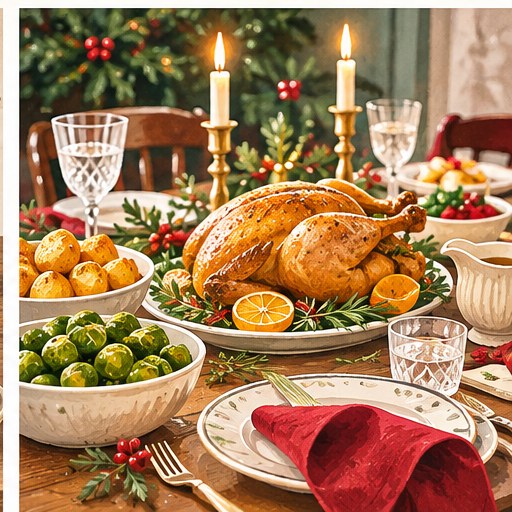
Create a Christmas that works for you — whether you're entertaining a group, sharing it with someone, or savouring time on your own. Thoughtful spending, good food, lovely things to make, and useful ideas to keep.
Enter your planned spending. The total updates instantly; use it to decide where the money will do most good.
Total planned spend:
PART 1
Plan and spend well
More joy. Less expense.
Part One · The good decisions before the good stuff
Living well. Spending wisely. Wasting less.
Create a Christmas that works for you
Whether you're gathering friends and family around the table or savouring a little festive time to yourself, good food is one of Christmas's great pleasures. And enjoying the best of it needn't mean spending a fortune.
Christmas is also the pleasure of giving something thoughtful, making a room welcoming, keeping an old tradition or inventing a better one. Perhaps your perfect day involves twelve people, an ambitious roast and a heroic amount of washing-up. Perhaps it involves two people, excellent cheese and absolutely no timetable.
This guide is for both. It's about making deliberate choices so that you can enjoy the things that matter to you without paying unnecessarily for everything else.
The Well Spent idea: spend confidently on what makes your Christmas yours. Be cheerfully unsentimental about the rest.
Start with the three things
Before the supermarket aisles turn festive and every advertisement begins to sound like a family obligation, choose three things that make Christmas feel special to you.
They might be:
A proper Christmas dinner, with all the trimmings, whether for one or fifteen.
Decorating the tree to the same familiar music.
A wintry walk followed by a pub lunch or hot chocolate.
Baking mince pies with children, despite the state of the kitchen afterwards.
Friends dropping by for soup, bread and something sparkling.
A day to yourself, with a good book, a favourite film and food you genuinely enjoy.
A carefully chosen present for someone you love.
Write down your three. These are your priorities, not somebody else's Christmas advert.
Top tip · The three-things rule: If a purchase or invitation doesn't contribute to one of your priorities, it deserves a second look. That doesn't mean you can't have spontaneous fun; it means spontaneous fun gets a budget too.
Give yourself permission to edit the traditions
Some traditions become precious through repetition. Others become obligations through the same mechanism.
It's reasonable to suggest a gift limit, organise a Secret Santa, buy for children only, share the cost of a meal or decline an expensive outing. Make those agreements early, before everyone has spent money.
If you're hosting, generosity needn't mean paying for everything. Ask one guest to bring dessert, another to sort drinks, and somebody who likes cooking to contribute a side dish. Keep it welcoming, not transactional.
If you're spending Christmas alone, plan for pleasure rather than treating the day as a smaller version of somebody else's. Buy the food you love. Make the table look lovely. Decide whether you want company, an outing or the luxury of doing nothing.
How to use this guide
You don't have to read it in order. Begin with the decisions that are most useful to you.
Spend smart: set a comfortable ceiling, compare offers and understand payment choices.
Gifts: choose thoughtful presents, experiences, subscriptions and things worth making.
Real Food. Real Budget.: build menus, cook generously and use leftovers well.
Make & decorate: create wreaths, tree decorations, cards and presents with instructions you can actually follow.
Time together: choose outings, traditions and ways to include others.
The Savings Hub: keep a practical record of costs, purchases and payment dates.
This first part makes the money decisions easier. The more enjoyable decisions can then take centre stage.
Your Christmas in twenty minutes
A plan doesn't have to be elaborate. It just has to be more useful than a collection of receipts discovered in January.
Minutes 0–4 · Choose your three
Write down your three priorities from the opening chapter. Add the people who matter to the plan, including anyone who may need a lift, a quieter gathering or a different menu.
Minutes 4–8 · Set the ceiling
Choose one total that fits the money you actually have available. Do not count a credit limit or a pay-later facility as additional income. Allow for your normal bills, other commitments and an emergency cushion.
Minutes 8–12 · Count the real costs
Include:
Gifts, cards, wrapping and postage.
Food, drinks and any special ingredients.
Travel, parking, taxis and accommodation.
Decorations, lights and craft materials.
Tickets, meals out and seasonal activities.
Contributions to shared celebrations or charitable giving.
A contingency for genuine surprises.
Top tip · The forgotten extras: Postage, batteries, last-minute transport, extra guests and the 'just one more' supermarket visit are all small enough to overlook and large enough to matter together.
Minutes 12–16 · Make three decisions
Choose one thing to make, one to buy and one to skip.
Make the mince pies if you enjoy baking. Buy the pastry if you don't. Skip the elaborate table favours if nobody remembers them. There is no medal for doing everything yourself.
Minutes 16–20 · Write the next three actions
For example:
Agree gift limits with family.
Confirm numbers and dietary requirements for Christmas lunch.
Compare the price of the main meal and book or buy only what needs arranging early.
Keep the list somewhere you will see it. A short plan that gets used beats a magnificent spreadsheet that doesn't.
The Christmas budget without the dread
A budget isn't a punishment. It's permission to spend on what matters—and to stop spending on what doesn't.
Start with a real number
Take the amount available after essential living costs, regular commitments and money you need to keep back. Decide what portion you are comfortable using for Christmas.
Here's an illustrative allocation for a £450 Christmas. It is not a recommendation or a claim about what Christmas ought to cost.
Category
Example
Food and drink
£140
Gifts and wrapping
£180
Decorations and home
£20
Outings and travel
£60
Contingency
£50
Total
£450
Your own mix may be completely different. A solo celebration may spend more on a special meal and less on gifts; a family gathering may need a larger food allowance. What matters is that the total is deliberate.
Use two numbers, not one
For each category, record:
Planned: the most you intend to spend.
Committed: what you've already paid plus anything you've agreed to pay later.
Then calculate available = total budget − all committed spending.
A £180 gift bought in three £60 instalments still uses £180 of your gift budget on the day you buy it. Counting only the first instalment is how January acquires a surprise guest.
A small contingency is part of the plan
If the entire budget is allocated down to the last pound, one unexpected train fare or extra guest can undo it. Set aside a modest buffer and use it for genuine needs—not as a standing invitation to buy a novelty biscuit tin.
Three useful budget conversations
With family: “Shall we set a £20 limit this year and put more into the meal?”
With friends: “I'd love to see you. Could we do lunch at home rather than another expensive night out?”
With children: “Let's choose the things we're most excited about doing, rather than trying to fit everything in.”
Agreeing expectations early is generally easier than explaining them at the checkout.
Top tip · The January check: Look at the first month's regular bills before you finalise December spending. The calendar changes; the direct debits don't.
The Christmas basket: buy well, not blindly
Seasonal packaging is excellent at making ordinary things look indispensable. It is less good at telling you whether they are worth the money.
Five questions before anything earns its place
Will it be used or eaten? A beautiful box of something nobody likes is still a box of something nobody likes.
Does it add genuine pleasure? Taste, convenience, tradition and a little luxury all count.
Do we already have enough? A second packet of biscuits might be useful. A sixth needs a persuasive case.
Is there a better-value route? Compare unit prices, usable portions, own-brand alternatives, making and buying.
What happens afterwards? Can it be stored, frozen, shared, repurposed or passed on?
You don't have to answer yes to all five. You do have to know why you're buying it.
Compare the unit, not the theatre
A shelf label shouting SPECIAL OFFER isn't evidence of value. Compare the price per 100g, per kilogram, per litre or per usable portion. Check pack sizes; a smaller festive pack may cost more than the everyday version.
Multibuys are useful only if you will use the quantity and can store it safely. A three-for-two offer on food that goes off before anyone eats it is a rather elaborate way to pay for waste.
Know where to trade up
Choose the things you genuinely care about: perhaps good cheese, the main roast, a favourite chocolate or a bottle to share. Save on the supporting ingredients when the difference is negligible.
Frozen vegetables, tinned tomatoes, beans, dried pulses and ready-made pastry can be excellent choices. Processing is not automatically a problem; what matters is the product, its ingredients, nutritional qualities and how it fits your meal.
Make or buy? Ask the useful question
Homemade isn't always cheaper, especially if you need to buy six ingredients in full packs for one small batch. Compare:
Ingredients actually used, and what you'll do with the remainder.
Energy, packaging and storage.
Time and enjoyment.
Quality and the number of portions.
Make it when it brings pleasure, improves quality or saves enough to matter. Buy it when the shortcut is genuinely useful. Nobody will revoke Christmas because the puff pastry came in a packet.
Top tip · Price per serving: For a party dish, divide the total usable cost by the number of realistic portions. It's a better comparison than the price of one impressive-looking packet.
Black Friday: find the bargains, avoid the nonsense
The best Black Friday purchase is something you already intended to buy, at a price you've checked. A countdown clock is not a financial plan.
Before the sale
Write down the exact item, model, colour, size and specifications.
Decide your maximum price before seeing the discount.
Check prices across retailers and, where possible, the product's price history.
Read reviews from sources independent of the seller.
Check whether the product is genuinely the same version: an older model or smaller pack may be cheaper for a reason.
During the sale
Compare the total cost, not the headline discount. Add delivery, required accessories, installation, returns charges and any subscription needed to use the product.
A voucher code may not stack with a sale price. Cashback can be conditional, delayed or declined. Treat pending cashback as a possible bonus, not money already saved.
Be cautious about “only two left”, endlessly resetting timers and dramatic crossed-out prices. They are reasons to verify, not reasons to hurry.
After checkout
Save the order confirmation, product description, delivery estimate, seller details and returns terms. Check your bank or card statement for the correct amount.
If a purchase is non-essential and you're feeling rushed, leave it overnight. The offer may disappear; so may the urge to buy it. Either outcome can be useful.
Top tip · A real saving has three parts: You wanted the item; you checked the usual price; and the final amount you pay is lower. A 60% discount on something you didn't need is still 100% spending.
Discounts, loyalty schemes and the clever Christmas shop
There are useful savings to be had, but the trick is to avoid spending more time and money chasing them than they return.
A sensible order of operations
Make your list. Separate essentials, treats and optional extras.
Compare the base price. Use comparable pack sizes and product specifications.
Check legitimate promotions. Look for retailer offers, loyalty prices and vouchers that apply to your actual basket.
Check delivery and collection. A lower product price can disappear under a delivery fee or an inconvenient journey.
Apply eligible codes. Check minimum spends, exclusions and expiry dates.
Consider cashback last. Read the terms and don't count it until it is confirmed.
Keep evidence. Save receipts and screenshots for high-value purchases or disputed offers.
The supermarket loyalty question
A loyalty price can be worthwhile. But compare it with the ordinary price elsewhere, not only with the non-member price on the same shelf. Look at unit prices and whether the promotion encourages a larger purchase than you need.
If you use more than one supermarket, choose where to shop based on the whole basket. Saving 40p on cranberry sauce isn't helpful if you spend £6 in fuel collecting it.
Vouchers, gift cards and Christmas clubs
A gift card is useful when the recipient likes the retailer and can redeem it conveniently. Check the expiry date, exclusions and what happens if the retailer fails.
Christmas savings clubs can help some people spread costs, but protections vary by scheme. Some restrict where you can spend, when you receive vouchers or how refunds work. Money held in a retailer voucher or club is not necessarily protected in the same way as money in a UK bank account. Read the terms and consider whether a separate savings account would give you more flexibility.
The hidden costs of 'free'
Free delivery above a threshold may encourage you to buy an unnecessary item. A free trial can become a paid subscription. A “gift with purchase” isn't free if it pushes you beyond your budget.
Top tip · The basket calculation: Compare what you actually need delivered to your door, after all discounts and charges. The smallest advertised price isn't necessarily the smallest bill.
The Christmas con: shop wisely, stay protected
Scams flourish where urgency, generosity and online shopping meet. A convincing website can be assembled quickly; so can a message pretending your parcel is stuck somewhere inconvenient.
Five minutes before paying
Find the retailer independently. Type the known address yourself or use a trusted bookmark instead of following an unexpected message or social advert.
Check the seller. Look for a real business identity, contact details, returns information and independent reviews. A UK-looking name does not prove a UK-based seller.
Look closely at the address. Slightly misspelled domains and unfamiliar payment pages deserve scrutiny. A padlock shows an encrypted connection, not that the shop is honest.
Question the price and urgency. An extraordinary bargain from an unknown seller is a reason to investigate.
Choose how to pay carefully. Be wary of requests for bank transfers to unfamiliar individuals, cryptocurrency or payment outside a marketplace's protected system.
The seasonal favourites
Fake delivery messages: A text says a parcel cannot be delivered until you pay a small fee. Don't use the link. Check directly through the courier's official site or app using the tracking details you already have.
Cloned shops: Fraudsters copy the look of familiar retailers, sometimes through social media adverts. Check the web address and search independently.
Marketplace pressure: A seller asks you to move to WhatsApp, pay privately or use “friends and family” transfers. Staying within the platform's proper payment system may preserve protections.
Gift-card requests: Someone claiming to be a relative, employer or official asks you to buy vouchers and send the codes. Stop and verify the request using a separate, trusted contact method.
Subscription traps: A free or cheap trial requires card details and renews automatically. Record the renewal date and cancellation method before signing up.
If something feels wrong
Stop further payments and contact your bank or card provider promptly using an official number or app. Preserve messages, order confirmations, screenshots and transaction details. Change compromised passwords and enable stronger account security where appropriate.
In England, Wales and Northern Ireland, report fraud through Report Fraud, the national reporting service. In Scotland, report to Police Scotland; advice is also available from consumer organisations. For immediate danger or a crime in progress, contact the police.
Top tip · The two-minute pause: A genuine retailer will survive two minutes of independent checking. A scammer would rather you didn't take them.
When Christmas shopping goes wrong
Returns and refunds depend on how you bought the item, who sold it and whether it is faulty. Keep those distinctions clear.
Faulty is different from unwanted
Under the Consumer Rights Act 2015, goods bought from a trader should be of satisfactory quality, fit for purpose and as described. For many faulty goods, consumers have a short-term right to reject within 30 days, subject to the rules and exceptions. After that, repair or replacement rights may apply, and remedies can depend on timing and circumstances.
A shop-bought gift that simply isn't wanted is different. There is generally no automatic legal right to return an in-store purchase just because the recipient changes their mind. A retailer may offer a goodwill returns policy, particularly at Christmas; check the dates and conditions.
Bought online?
For many distance purchases from a business, the Consumer Contracts Regulations provide a 14-day cancellation period after delivery, with a further 14 days to return the goods after notifying the trader. Exceptions exist, including certain personalised, perishable, sealed hygiene and digital products. Return-postage responsibilities depend on the circumstances and the information supplied by the trader.
Don't assume that every marketplace seller is a business. Buying from a private individual may give you fewer statutory consumer protections, although items must not be misrepresented.
Late or missing deliveries
Check the delivery date agreed with the trader. Where delivery is delayed, your rights depend on the contract and whether a date was essential or a reasonable further deadline has been given. Contact the seller, not just the courier: the trader is generally responsible for getting goods to you under a consumer sales contract.
How you paid matters
For qualifying credit-card purchases, Section 75 of the Consumer Credit Act can make the credit provider jointly liable for certain breaches of contract or misrepresentation, generally where the cash price of a single item is over £100 and no more than £30,000. Eligibility is more complicated with intermediaries, supplementary cardholders and certain payment arrangements; don't assume it applies automatically.
Chargeback is a card-scheme process that may help with debit or credit card disputes, but it is not the same as a statutory Section 75 right and has scheme rules and time limits.
Keep the receipt, product listing, correspondence and delivery information. Raise the problem promptly with the seller, then with your payment provider if appropriate.
Useful UK sources: Citizens Advice consumer service; GOV.UK consumer rights guidance; the Financial Ombudsman Service for eligible financial complaints.
Pay now, pay later—or think again
Spreading the cost of something you already planned to buy can help cash flow. It doesn't make the item cheaper.
Understand the payment button
Apple Pay and Google Pay are ways to use a supported payment method; they aren't automatically loans. A debit card, credit card, digital wallet and pay-later agreement can look similar at checkout while having very different consequences.
Buy-now-pay-later products, retail instalment agreements and 0% credit cards differ in interest, fees, eligibility, missed-payment consequences, reporting and legal protections. Read the actual agreement rather than relying on a brand name or a generic description.
The £180 example
A £180 present paid in three equal interest-free instalments is still £180: £60 now and £60 at each of two later dates, assuming no fees.
Buy five such presents and you've committed £900, with £300 due at each payment point. Those later payments must fit around the normal household bills.
Record the full cost at purchase in the Christmas budget and the individual due dates in a payment calendar.
Before borrowing, ask
Would I still buy this if I had to pay in full today?
Can I afford every payment without cutting into rent, food, utilities or other essentials?
What happens if an unexpected bill arrives?
What are the interest, charges and consequences if I pay late?
Am I using credit for a genuine planned need, or to meet an expectation I could change?
A 0% offer can be useful when managed carefully, but missed payments or an uncleared balance after the promotional period can make it costly. High-cost short-term borrowing deserves particular caution.
Borrowing from family or friends
An interest-free loan can be financially cheaper than commercial borrowing, but uncertainty about repayment can strain a relationship. Agree whether the money is a loan or gift, the amount and repayment dates, and what happens if circumstances change. Write it down.
If someone asks you to lend, only offer what you could manage without if repayment is delayed. Helping with groceries, travel or a shared meal may sometimes be kinder than creating a debt.
When money is already tight
A smaller Christmas is preferable to unaffordable repayments. Free, independent help is available from MoneyHelper, StepChange, National Debtline and Citizens Advice. Seek advice early rather than taking another loan to cover existing commitments.
Top tip · January gets a vote: Before accepting any payment plan, put every January instalment alongside your ordinary January bills. If the numbers don't work, the purchase doesn't work.
The Well Spent decision tests
Good value is not always the lowest price. It's the balance of quality, usefulness, enjoyment, convenience, nutrition where relevant, and what gets wasted.
The five-question test
Use this for gifts, food, outings, decorations and homemade projects.
Will it matter? Does it support one of your three priorities?
What's the true cost? Include delivery, ingredients bought in full packs, travel, energy and time.
What's the alternative? Compare buying, making, borrowing, buying second-hand or simply doing without.
What happens afterwards? Will it be eaten, used, stored, shared, returned or thrown away?
Would I choose it again? Will you still be glad of the decision once Christmas is over?
Three useful labels throughout the guide
The Smarter Spend identifies an easy way to get better value without sacrificing what matters.
Why This Works explains the practical reasoning behind a suggestion—whether that's cost per portion, reduced waste or a simpler method.
Worth Making or Buying? helps you decide where effort genuinely pays off and where a good shortcut is the better choice.
Your one-page planning sheet
Question
Your answer
My three Christmas priorities
__________________
Total comfortable budget
£__________________
Food and drink allowance
£__________________
Gifts and wrapping allowance
£__________________
Travel and activities allowance
£__________________
Decorations and home allowance
£__________________
Contingency
£__________________
Already committed, including later payments
£__________________
Still available
£__________________
One thing to make
__________________
One thing to buy
__________________
One thing to skip
__________________
My next three actions
__________________
Keep the sheet somewhere useful and update it when you commit to spending, not just when the money leaves your account.
The good things start here
With the practical decisions made, there's room for the part we actually look forward to: finding a gift that feels personal, making a house welcoming, choosing something delicious for the table and enjoying time together—or a little peace and quiet.
A very good Christmas isn't necessarily the biggest or busiest. It's one that feels like yours.
Next: Thoughtful gifts, experiences, subscriptions and homemade presents.
Editorial source note (not for customer-facing publication): This part is newly rewritten and consolidated from the recovered Well Spent planning, budgeting, discounts, scam protection, consumer rights and borrowing material. Legal and provider terms are deliberately described at a general level; current legislation, reporting arrangements and payment-provider terms must be verified before commercial release. Illustrations proposed: opening festive vignette; three-priorities graphic; twenty-minute plan; illustrated basket test; Black Friday price-comparison visual; scam red-flags diagram; payment-calendar example.
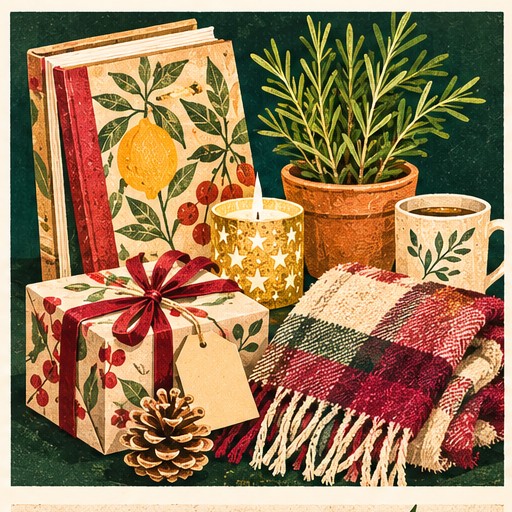
A good present says, “I know you.” It doesn't have to say, “I spent three Saturdays and a worrying amount of money finding this.”
Think about the person first, then the price. Their tastes, routines, interests, living space and sense of humour are more useful than a retailer's list of gifts for “the impossible-to-buy-for man”.
The thoughtful gift test
Before buying, ask:
Will they genuinely enjoy or use it? An interesting object is not necessarily an interesting present for them.
Does it suit their circumstances? Consider space, mobility, dietary needs, access and how far they would have to travel.
Will it create another expense? Batteries, accessories, postage, booking fees and ongoing subscriptions are part of the gift's real cost.
Could an experience be better? Shared time, a lesson or a favourite outing may mean more than another possession.
Could second-hand be lovelier? A carefully chosen vintage find, used book or refurbished item can be more distinctive than something generic and new.
Top tip · The recipient's ordinary Tuesday: Imagine the person using the present on an ordinary Tuesday in February. If that picture doesn't quite work, reconsider.
Agree the rules before the shopping begins
Families and friends can spend far more than anyone intended because nobody wants to be the first to suggest a limit.
Try a clear arrangement:
A spending cap for adults, with children treated separately if everyone agrees.
One Secret Santa gift rather than buying for every person.
Gifts only for children, with adults sharing a meal or outing.
A book exchange, edible gift exchange or second-hand challenge.
A shared contribution towards one meaningful present.
Keep the rules simple. A “£20 limit” shouldn't become £20 plus a charming extra plus an emergency little something.
Give the right amount of choice
Gift vouchers can be excellent when they fit a specific interest: a bookshop they love, a restaurant they already visit, or a class they've mentioned. Check expiry dates, redemption restrictions and whether the balance can be spent in more than one visit.
Cash can be the most thoughtful gift for somebody saving towards something important. A warm note explaining what you hope they'll enjoy can make it personal without disguising what it is.
Worth making or buying? Buy when the product is better, safer or more practical. Make when the effort adds pleasure, meaning or quality. Neither is automatically more virtuous.
Beautiful gifts, less spending
The secret to a present that feels generous is often editing. One excellent thing, chosen with care and presented beautifully, beats a bag of vaguely festive extras.
Small luxuries that earn their place
The reading evening: A good second-hand novel in excellent condition, a bookmark and a small packet of tea or chocolate. Choose a writer the recipient actually enjoys; “bestselling” is not a personality.
The gardener's little parcel: Seeds suited to the season and growing conditions, sturdy labels and a handwritten planting note. A healthy plant can also be lovely; check whether it is suitable for a home with pets or young children.
The cook's favourite ingredient: A really good spice blend, a jar of preserved lemons, quality olive oil or a specialist condiment. Add one or two practical serving ideas rather than five unrelated gadgets.
The Sunday-morning treat: Coffee or tea they love, a small jar of good marmalade and a loaf or pastry bought fresh close to gifting.
The creative afternoon: A sketchbook with decent paper and a pencil, or a thoughtfully selected craft kit with everything needed to finish the project.
Second-hand, vintage and refurbished
A used object can be both economical and special. Look for condition, completeness and suitability, especially for electronics and children's items.
For electrical goods, choose reputable refurbished sellers with clear testing and returns arrangements. For toys, check age suitability, safety markings, missing parts and recalls. Avoid second-hand safety equipment where you cannot verify its history or condition.
A vintage serving dish or beautifully bound book may need nothing more than careful cleaning and a handwritten card.
Top tip · Presentation does half the work: Reuse a handsome box, tie it with ribbon and add a tag explaining why you chose the gift. Avoid unnecessary plastic fillers and elaborate packaging that immediately goes in the bin.
Gifts that are experiences, not obligations
Experiences can be wonderful, especially for people who have enough possessions. The best ones are easy to enjoy and don't require the recipient to organise a small expedition at their own expense.
Ideas that fit different people
Culture: cinema membership, theatre tickets, a gallery exhibition or museum membership.
Learning: a pottery workshop, cookery class, local history walk or short online course.
Outdoors: a garden visit, wildlife walk, guided nature experience or a day at a favourite place.
Food and company: lunch together, afternoon tea, a supper you cook or a tasting event suited to their interests.
Time and help: a promised afternoon of gardening, batch cooking, picture hanging or childcare—provided you genuinely intend to turn up.
Check the practicalities
Before buying, confirm:
Whether the gift can be booked on dates the recipient can realistically attend.
Whether travel, parking, materials or food cost extra.
Accessibility, age limits and any physical demands.
Expiry dates, cancellation terms and what happens if a session is cancelled.
Whether the voucher is transferable or refundable.
A gift that requires a two-hour journey and £40 in extras may be less generous than it first appears.
Make the invitation feel like a present
Give a simple card with the details and, for a shared experience, two or three suggested dates. “I'll take you to lunch in January—your choice of these places” is much better than “We must do lunch sometime,” which can become a tradition of its own without ever involving lunch.
Top tip · The best experience gift has a plan: Include what you've paid for, what the recipient needs to do and when you can enjoy it together.
Subscriptions: a treat or a recurring bill?
A subscription can keep a good gift going long after Christmas. It can also quietly become a monthly expense somebody didn't ask for.
Choose the kind of gift deliberately
Fixed-term gift: A three-, six- or twelve-month subscription that ends without requiring the recipient to cancel is usually the easiest option.
Renewing subscription: May offer more flexibility, but establish who pays after the gift period, whether the recipient must provide card details and how cancellation works.
Membership: Often includes more than access—discounts, events or guest privileges. Those extras matter only if the person can use them.
What might suit whom?
Interest
Possible gift
What to check
Reading
Book or magazine subscription
Format, genres, delivery, duplicates
Film
Cinema membership or passes
Local participating venues, booking fees
Culture
Museum, gallery or heritage membership
Distance, exclusions, guest benefits
Learning
Online course or classes
Level, access period, equipment
Music
Concert membership or streaming gift
Compatibility, ads, renewal terms
Gardening
Seasonal seed or plant delivery
Timing, climate, space and pet safety
These are categories to compare, not claims that a particular provider offers a particular price or term.
The subscription checklist
Confirm the total gift cost, not only the introductory price.
Check when the gift starts and whether the first delivery can arrive after Christmas.
Identify who controls the account and whether payment details are required.
Record renewal and cancellation conditions in plain English.
Make sure the gift is accessible on the recipient's devices or in their area.
Keep the receipt and redemption instructions.
Include a card saying, for example: “Six months of your favourite magazine, paid in full. It ends automatically in June.” A subscription should not arrive with an administrative burden attached.
Smarter spend · A trial isn't necessarily a gift: If you have to hand over someone else's payment details, ask them to cancel, or rely on a promotional rate that jumps later, choose a fixed-term alternative.
Gifts for food lovers: five little luxuries
A lovely food hamper is not a collection of expensive jars bought because their labels match. It is a small invitation to enjoy something delicious.
Choose a theme, edit the contents and spend on one or two things that matter. A sturdy reused box, basket or tin, tissue paper and a handwritten note can do the rest.
The cheese lover's little luxury
For: Someone who enjoys a quiet evening with very good cheese.
Include:
One or two cheeses they genuinely like—perhaps a mature Cheddar and a soft cheese.
A small jar of chutney or onion marmalade.
Oatcakes or crackers.
A modest wooden cheeseboard, preferably one they'll use again.
Optional for an adult who drinks alcohol: a small bottle of port.
Presentation: Wrap the shelf-stable items in a shallow box, tuck the board behind them and give the cheese separately in a chilled bag close to handover. Add a note about taking the cheese out shortly before serving, following the producer's advice.
Storage: Keep perishable cheese refrigerated at the temperature stated on its packaging. Don't leave a completed cheese hamper under a warm tree for hours. Check use-by dates and allergen labels. Keep alcohol away from children.
Why this works: One good cheese with the right accompaniments feels more special than five mediocre cheeses that nobody finishes.
The Italian supper hamper
For: Someone who likes a good dinner without a complicated recipe.
Include:
250–500g good dried pasta.
A tin or jar of quality tomatoes.
A small bottle of olive oil.
Dried oregano, chilli flakes or basil.
Optional olives or capers, if you know they like them.
Ingredients: 200g dried pasta; 1 tbsp olive oil; 2 garlic cloves, sliced; 400g tinned tomatoes; a pinch of chilli flakes; ½ tsp dried oregano; salt and pepper; optional grated hard cheese.
Method:
Cook pasta in salted boiling water according to the packet; reserve a mug of cooking water.
Warm oil in a pan. Gently cook garlic for about a minute without browning. Add chilli, oregano and tomatoes.
Simmer for 10–15 minutes, breaking up the tomatoes; season.
Toss with drained pasta, adding a splash of cooking water if needed. Finish with cheese if using.
Storage: Pack unopened shelf-stable ingredients and check their best-before dates. The cooked sauce should be cooled promptly, refrigerated and eaten within 48 hours, or frozen promptly; reheat until steaming hot.
The homemade biscuit tin
For: Teachers, neighbours, friends, hosts—or somebody who is always pleased to see a biscuit.
Choose a clean, dry, airtight tin. Line it with baking parchment and separate layers with more parchment. Add a handwritten ingredients and allergens label, a baked-on date and a sensible storage note.
Recipe · Classic shortbread (about 20 small fingers)
Heat oven to 160°C fan / 180°C conventional. Line a baking tray.
Beat butter and sugar until combined; mix in flour, salt and zest, if using, to form a soft dough.
Press or roll to about 1cm thick. Cut into fingers or rounds and place on the tray. Chill for 15 minutes if the dough is soft.
Bake for approximately 15–20 minutes, until pale gold at the edges. Larger pieces may need longer.
Cool completely on a rack before packing.
Storage: Keep airtight in a cool, dry place and aim to give and eat within about a week for best quality. Freeze baked shortbread in a suitable container for longer storage. Contains wheat/gluten and milk; check all ingredient labels for other allergens.
Variation: Add a little ground cardamom or cinnamon. For a different gift, use orange zest instead of lemon.
Top tip · Keep crisp things crisp: Don't pack shortbread alongside moist cake, fresh fruit or soft sweets. They will share moisture, and the biscuits will lose their snap.
The winter-evening hamper
Include: Good cocoa, chocolate, cinnamon, a few biscuits and a handsome second-hand mug in excellent condition.
Recipe card · Proper hot chocolate (serves 2)
Ingredients: 400ml milk or fortified unsweetened plant drink; 40g dark chocolate, finely chopped; 2 tsp unsweetened cocoa; 1–2 tsp sugar or honey, to taste; pinch of cinnamon.
Method:
Warm the milk gently in a small pan; do not let it boil hard.
Whisk cocoa with a spoonful of warm milk to make a smooth paste.
Whisk the paste into the pan, add chocolate and stir until melted.
Sweeten to taste, add cinnamon and serve immediately.
For a dairy-free gift, check that the chocolate and biscuits are suitable and label the hamper accurately.
The adventurous cook's spice collection
Choose three or four useful, clearly labelled spices: smoked paprika, cumin, ground coriander and chilli flakes make a versatile set. Add a recipe card showing how to use them together.
Recipe card · Quick spiced chickpeas (serves 2)
Ingredients: 1 tbsp oil; 1 small onion, chopped; 1 garlic clove, crushed; ½ tsp cumin; ½ tsp smoked paprika; ½ tsp ground coriander; pinch of chilli; 400g tin chickpeas, drained and rinsed; 200g chopped tomatoes; 2 tbsp water; squeeze of lemon.
Method:
Soften onion in oil for 5–7 minutes; add garlic and spices for 30 seconds.
Stir in chickpeas, tomatoes and water. Simmer for 10–12 minutes.
Finish with lemon. Serve over rice, with flatbread or spooned into baked potatoes.
Storage: Use sealed spices in their original packaging or clean food-safe containers with full ingredient labels and best-before dates. Don't give unlabelled spice mixes to somebody with allergies.
Homemade gifts that deserve to be kept
Homemade gifts are best when the making is part of the pleasure and the finished result is something somebody genuinely wants.
Three easy wins
A jar of spiced nuts: Use a tested recipe with clear baking instructions; cool thoroughly and pack airtight. Nuts are a major allergen, so label prominently. Avoid giving to households where allergies are uncertain.
A handmade recipe booklet: Gather five family favourites or recipes the recipient has asked for. Add serving notes, useful substitutions and a proper index. Print on good paper and bind simply.
A decoration set: Make a small collection of folded paper angels, ribbon bows or dried citrus ornaments. Package them in a reusable box with tissue paper and a note about keeping them dry and away from heat.
The wrapping is part of the gift
Reused tins, baskets, jars, boxes and fabric can look beautiful. Choose food-safe containers for edible gifts. A decorative jar is not automatically suitable for preserving food; don't present homemade shelf-stable preserves unless you've followed a properly validated preservation method.
Use natural ribbon, string or paper tags if you like the look. Reuse what you have first.
Top tip · Make a sample before making ten: One trial batch tells you whether the recipe, packaging and timing are realistic. It is a much better discovery in November than on Christmas Eve.
What not to make casually
Homemade skincare, candles, infused oils and preserved foods may have safety, labelling or storage requirements beyond a simple craft project. For candles, use a suitable tested kit and vessel, follow manufacturer instructions and burn-test before gifting. Never embed dried flowers, citrus, nuts or other combustible decorations in the wax.
For infused oils containing fresh garlic or herbs, don't improvise shelf-stable storage: incorrect handling can create serious food-safety risks. Choose a different gift unless using a validated method.
Presents for children: play, make, discover
Children don't necessarily need more presents; they need presents they can enjoy. Age, interests, developmental stage and available space matter more than the latest must-have list.
Think in four directions
Make: Good-quality drawing materials, age-appropriate sewing, construction or craft kits.
Explore: Nature identification guides, magnifiers, simple gardening tools or local outing tickets.
Play: Games that suit the child's age and the people they'll play with.
Read: Books chosen for their actual interests, including well-kept second-hand copies.
An experience with a parent, grandparent or trusted adult can be particularly memorable: baking, a museum trip, a train journey, a workshop or a walk with a picnic.
A purposeful decoration kit
Rather than a box of glitter and good intentions, create a kit that makes four finished tree decorations.
For a school-age child, with adult supervision:
Four pre-cut sturdy card stars or folded-paper angel templates.
Four lengths of ribbon or twine.
Coloured pencils or paper scraps.
Glue stick and four gift tags.
One illustrated instruction card.
A small reusable box.
Method:
Decorate the stars or assemble the folded angels.
Let glue dry fully.
Ask an adult to make hanging holes if needed.
Thread ribbons and tie securely.
Put the decorations in the box, ready to hang or give.
Use child-safe materials suited to the child's age. Small bells, beads, nuts, ribbons and candy canes can be choking or entanglement hazards for young children; keep them out of reach. Adults should handle sharp tools and any hot-glue work.
Why this works: The activity produces something to keep or give, rather than an afternoon of making a mess with no particular destination.
The gracious art of regifting
Regifting can be sensible, generous and entirely acceptable. It becomes awkward when the recipient receives something unsuitable, damaged or obviously passed on without thought.
The good regift checklist
The item is unused, clean and in excellent condition.
It genuinely suits the new recipient.
It isn't personalised for somebody else.
It isn't expired, unsafe or missing essential parts.
There is no likely embarrassment if its history becomes known.
If the item is pre-owned, especially if condition matters, be open about it. A lovely vintage piece is a feature, not a secret.
Unwanted presents after Christmas
Check whether the original retailer accepts change-of-mind returns and whether a gift receipt is available. Statutory rights for faulty goods are separate from goodwill return policies.
If a return isn't possible, consider a charity shop, community exchange, selling platform or someone who would genuinely enjoy the item. Check what organisations accept before donating.
Keep attractive gift bags, ribbon and sturdy boxes for next year. They don't need a ceremonial storage system—just somewhere dry and easy to find.
Top tip · Keep a private gift note: Record ideas people mention during the year and which presents were genuinely enjoyed. It's more useful than trying to remember everything on 20 December.
Giving without the pressure
Christmas can make generosity feel compulsory. It isn't. A warm invitation, a thoughtful card, a shared meal or an offer of practical help can be meaningful without creating an expense neither person wants.
If you'd like to support a charity, food bank, community fridge or local appeal, check what is actually needed. Money can sometimes be more useful than an unsolicited bag of goods, and food banks may have specific requirements for donations.
Think too about neighbours who might welcome company, someone recovering from illness, or a friend who is finding December difficult. Ask rather than assume. “Would you like to join us for soup on Sunday?” is often better than a grand gesture.
A gift note worth writing
You don't need elaborate sentiment. Say why you chose it:
“I remembered how much you enjoyed that exhibition, and thought this might give you another lovely afternoon.”
“This is for the next rainy Sunday when you need an excellent book and a proper cup of tea.”
“I made these for your tree because I know you like decorations with a bit of history.”
Specificity is warmer than extravagance.
The final gift check
Before wrapping, ask whether the present is:
Right for the person.
Complete and usable.
Safe, suitable and appropriately labelled.
Within the agreed budget.
Presented with care.
Then stop. Resist the urge to add something unnecessary just because the parcel looks small.
A note before we turn to the table
The best gifts are not necessarily the most expensive, original or photogenic. They are the ones that make the recipient feel known, considered and quietly delighted.
And if the gift happens to be a very good biscuit, so much the better.
Next: Real Food. Real Budget. — festive menus, delicious recipes, entertaining and the useful art of leftovers.
Production illustration plan (not customer-facing copy): Full-page opening scene with thoughtfully wrapped gifts; a three-panel gift test graphic; vintage book and plant gift vignette; experience gift card and cinema-ticket collage; subscription term comparison graphic; five individual food-hamper illustrations including a cheese board with port and preserves; illustrated shortbread method; purpose-made children's decoration kit; natural wrapping and regifting vignette. Product prices and specific subscription terms should be populated only after current retailer verification.
Good food at Christmas is part of the joy, whether you're entertaining a crowd or savouring a quiet day to yourself. The aim isn't to cook the most dishes. It's to put the right dishes on the table, enjoy them, and avoid paying for food that nobody wanted in the first place.
Start with the main event, then add only the things that improve it. A roast with crisp potatoes, two good vegetables, gravy and a pudding can be a splendid meal. It does not need nine additional sides and a nervous host.
Choose the occasion, not the imaginary guest list
For one: Choose a favourite main, make a proper plate of it and plan something lovely for later. A small roast chicken portion, a mushroom and lentil pie, or a good baked potato with festive toppings can all feel celebratory. Buy or make only the portions you will enjoy.
For two: A whole chicken, a small joint or a pastry-topped vegetable pie can provide Christmas dinner and useful leftovers. Spend on the parts you both love.
For a group: Ask guests about allergies and dietary requirements before buying. Choose one main and a credible vegetarian or plant-based option if needed. Invite contributions, but keep one person responsible for the overall menu and oven schedule.
Top tip · Three decisions before shopping: How many people? Which main? Which three accompaniments matter most? Once those are settled, the rest becomes easier.
Seven occasions, seven lovely menus
These are mix-and-match menus, not instructions to cook all seven. Each dish has a recipe or clear method in this part; bought alternatives are identified.
Christmas Eve: soup, bread and the beginning of the holiday
To finish: Clementines and good chocolate, or shop-bought mince pies.
Why it works: Much can be prepared ahead. Nobody needs a three-course performance the evening before Christmas.
Christmas Day: the familiar feast
Main: Roast chicken or turkey, cooked according to weight and reliable packaging or food-safety guidance (Method A), or mushroom and lentil pie (the corresponding recipe).
Sauce: Proper quick gravy (the corresponding recipe).
Dessert: Warm mince pies with yoghurt, cream or custard, or a bought Christmas pudding.
Worth making or buying? Homemade roast potatoes usually reward the effort. Ready-made pastry, bought pudding and a good jar of cranberry sauce may be exactly the shortcuts you want.
Boxing Day: the relaxed table
Main: Turkey, tomato and white-bean soup (the corresponding recipe), made with safely stored cooked turkey, or beans alone.
Alongside: Toasted cheese sandwiches or leftover flatbreads.
Dessert: Fruit, shortbread or whatever genuinely needs eating.
Alongside: Flatbreads (the corresponding recipe) and a spoonful of yoghurt.
Dessert: Sliced oranges with cinnamon, or leftover Christmas cake.
The festive shopping plan
Shop the cupboards first
Before ordering anything, check the fridge, freezer and cupboards. You may already have flour, lentils, rice, tinned tomatoes, spices, dried fruit, stock and enough condiments to furnish a small shop.
Write your menu and list the ingredients actually needed, not every ingredient mentioned in every possible recipe. Cross-reference dishes: carrots can serve the roast and a soup; lemons can lift a traybake, dressing and leftover meal.
Buy in three waves
Early: Shelf-stable ingredients, drinks, pantry staples, freezer-friendly foods and items with long dates. Check available space before buying.
A few days before: Fresh vegetables, bread, dairy and ingredients with suitable use-by dates. Follow packaging instructions.
Close to serving: Highly perishable food, delicate greens, fresh fish and any item whose quality depends on freshness.
Frozen vegetables and fruit are useful allies, especially when fresh produce is expensive or likely to spoil. Tinned beans and tomatoes save time without requiring a nutritional apology.
Portions: calculate for appetites, not photographs
A generous table needn't mean mountains of leftovers. Think about who is coming, whether children will eat smaller portions, how many sides there are and whether guests have dietary needs.
For roast meat, consult the producer's portion and cooking guidance; bone-in and boneless cuts yield different amounts. For potatoes, a starting estimate is roughly 200–250g raw per adult for a roast dinner, adjusted for appetite and other sides. For cooked vegetables, roughly 80–120g of each chosen vegetable per person is a practical starting point, not a rule.
Smarter spend · The second helping test: Would your guests rather have one more helping of the dishes they love or six extra dishes they didn't request?
The Christmas kitchen timetable
A calmer kitchen is usually the result of fewer competing jobs.
Two days before
Confirm guest numbers, allergies and any dietary restrictions.
Check the fridge and freezer have space.
Make suitable soups or sauces ahead, cool promptly and refrigerate or freeze safely.
Prepare shopping and serving dishes.
Christmas Eve
Wash and prepare vegetables where suitable; refrigerate cut vegetables.
Make dessert or assemble the vegetarian pie if the recipe permits.
Set the table, lay out serving utensils and decide where dishes will go.
Check thawing instructions if cooking a frozen bird. Large poultry can take several days to thaw safely in the fridge; don't assume overnight will do.
On the day
Work backwards from serving time.
Allow sufficient cooking and resting time for the main.
Use the resting period to finish potatoes, vegetables and gravy.
Warm plates if you wish, without creating a burn hazard.
Ask somebody else to pour drinks and clear space.
Top tip · One oven, one plan: Write down the oven temperature and time each dish needs. If three recipes demand different temperatures at the same moment, change the menu or prepare one ahead.
The recipes
The recipes below are editorial home-cooking methods, not claims of laboratory or professional kitchen testing. Timings are approximate: ovens, ingredients and pan sizes vary. Use a food thermometer where appropriate, check manufacturer instructions and adapt for allergies.
Roast squash, apple and chestnut soup
Serves: 4 as a starter or 3 as a main Time: About 45 minutes Ingredients: 800g peeled, deseeded squash in chunks; 1 onion, quartered; 1 eating apple, cored and quartered; 2 tbsp olive oil; 100g cooked vacuum-packed chestnuts; 750ml vegetable stock; ½ tsp dried thyme; salt and black pepper; optional plain yoghurt to serve.
Heat the oven to 200°C fan / 220°C conventional. Toss squash, onion and apple with oil and thyme on a large tray.
Roast for 25–30 minutes, turning once, until tender and lightly browned.
Transfer to a saucepan with chestnuts and stock. Simmer for 5 minutes.
Blend until smooth, adding water to adjust thickness. Season and serve with a swirl of yoghurt if liked.
Swap: Use a sweet potato in place of some squash; omit chestnuts and add a little extra squash for a cheaper version. Storage: Cool promptly and refrigerate for up to 48 hours, or freeze in portions promptly. Reheat until steaming hot.
Quick yoghurt flatbreads
Makes: 6 small flatbreads Time: 25 minutes Ingredients: 200g self-raising flour, plus extra for dusting; 200g thick plain yoghurt; ½ tsp salt; 1 tsp olive oil for the pan if needed.
Mix flour, yoghurt and salt into a soft dough. Add a little more flour if very sticky.
Divide into six balls; roll into thin rounds on a lightly floured surface.
Heat a heavy frying pan over medium-high heat. Cook each bread for 2–3 minutes per side, until spotted brown and cooked through.
Keep warm under a clean tea towel.
Swap: Use a suitable plant-based yoghurt and self-raising flour if you need a dairy-free version; results may vary. Storage: Best fresh. Cool, refrigerate and use within 48 hours; reheat thoroughly in a dry pan. Contains wheat/gluten and, unless adapted, milk.
Mushroom and lentil pie
Serves: 4 Time: About 60 minutes Ingredients: 1 tbsp olive oil; 1 onion, finely chopped; 2 carrots, diced small; 250g mushrooms, chopped; 2 garlic cloves, crushed; 1 tsp dried thyme; 2 tbsp tomato purée; 400g tin green or brown lentils, drained; 200ml vegetable stock; 1 tsp soy sauce (optional); 320g sheet ready-rolled puff pastry; a little milk or plant drink for brushing.
Heat oven to 190°C fan / 210°C conventional. In a wide pan, soften onion and carrots in oil for 8 minutes.
Add mushrooms and cook until their moisture has mostly evaporated, about 7 minutes. Add garlic, thyme and tomato purée; stir for 1 minute.
Add lentils, stock and soy sauce if using. Simmer 8–10 minutes until thick, not soupy. Season. Cool slightly.
Spoon into a medium pie dish. Cover with pastry, trim and seal the edges, and cut a small steam slit. Brush with milk.
Bake 25–30 minutes until the pastry is deeply golden and the filling is piping hot.
Swap: Use finely chopped cooked chestnuts for some mushrooms. Check pastry and soy sauce ingredients for gluten and other allergens. Storage: Refrigerate leftovers promptly and eat within 48 hours, reheating until steaming hot. Freeze the cooled filling separately for best results.
Method A · Roast poultry without guesswork
Choose a bird or joint that fits your oven, your guest list and your budget. Follow the specific product's cooking instructions for temperature and time; stuffed, unstuffed, whole and boneless poultry cook differently. Do not wash raw poultry. Prevent raw juices contacting ready-to-eat foods. Cook thoroughly and verify the thickest part reaches a safe temperature using a clean food thermometer; UK Food Standards Agency guidance includes 75°C for 30 seconds as one suitable time-temperature combination. Check in more than one place, avoiding bone. Rest according to the product guidance, then carve using clean utensils.
If you have a large frozen bird, thaw fully in the fridge following its weight-based instructions, allowing sufficient time. Never rely on the colour of juices alone to determine doneness.
Heat oven to 190°C fan / 210°C conventional. Cut vegetables into similar-sized batons.
Toss with oil and roast for 20 minutes.
Mix honey and mustard, toss with vegetables and roast 10–15 minutes more until tender and browned.
Swap: Maple syrup makes this plant-based; check mustard ingredients for allergens. Tip: Add the sweet glaze towards the end to reduce burning.
Quick savoury gravy
Makes: About 500ml Time: 15 minutes Ingredients: 1 tbsp butter or oil; 1 small onion, finely chopped; 1 tbsp plain flour; 500ml chicken or vegetable stock; 1 tsp soy sauce or Worcestershire sauce (optional); black pepper.
Soften onion in fat for 5–7 minutes.
Stir in flour and cook for 1 minute.
Add stock gradually, stirring to prevent lumps.
Simmer for 5 minutes, season and strain if you prefer smooth gravy.
Swap: Use vegetable stock and a vegan savoury sauce for a plant-based version. Check sauces for gluten, fish and other allergens. Top tip: If using pan juices from roast poultry, remove excess fat and ensure the juices are fully cooked before adding.
Add paprika, tomatoes, beans and stock. Simmer 10 minutes.
Stir in cooked turkey and spinach. Heat until steaming hot throughout, then finish with lemon.
Swap: Omit turkey and add another tin of beans. Safety: Use cooked poultry only if it has been cooled and stored safely. Follow FSA guidance on leftovers; as a conservative household rule, refrigerate promptly and use within 48 hours, or freeze promptly. Don't use leftovers that have spent hours at room temperature.
Lemon and herb chicken traybake
Serves: 4 Time: About 55 minutes Ingredients: 4 chicken thighs (bone-in, skin-on or skinless); 600g potatoes, cut into wedges; 2 red onions, cut into wedges; 2 peppers, sliced; 2 tbsp olive oil; 1 lemon (zest and juice); 2 garlic cloves, crushed; 1 tsp dried oregano; salt and pepper.
Heat oven to 200°C fan / 220°C conventional. Toss potatoes and onions with half the oil. Roast for 15 minutes.
Mix remaining oil with lemon zest, half the juice, garlic and oregano.
Add peppers and chicken to the tray, coat with the lemon mixture and roast 30–40 minutes more, until the chicken is safely cooked through (check the thickest part with a thermometer, avoiding bone).
Finish with remaining lemon juice. Rest briefly before serving.
Plant-based alternative: Replace chicken with two tins of drained chickpeas, adding them with the peppers; roast until hot and lightly crisp. Use the shorter timing needed for vegetables rather than poultry. Storage: Refrigerate cooked leftovers promptly and eat within 48 hours, reheating until steaming hot.
Warm lemony couscous
Serves: 4 as a side Time: 10 minutes Ingredients: 250g couscous; 300ml boiling vegetable stock (or packet amount); 1 tbsp olive oil; juice of ½ lemon; 2 tbsp chopped parsley or mint; black pepper; optional 30g toasted flaked almonds.
Put couscous in a heatproof bowl, add stock, cover and stand for 5 minutes, or follow the packet instructions.
Fluff with a fork. Add oil, lemon, herbs and pepper.
Scatter over almonds if using.
Swap: Use cooked rice or quinoa for a gluten-free option; follow its separate cooking instructions. Almonds are a tree-nut allergen.
Core apples without cutting through the base. Mix raisins, oats, cinnamon, butter and sugar if using.
Fill the apples and stand in a baking dish with water.
Bake 25–35 minutes until tender. Serve warm with yoghurt or custard.
Swap: Use chopped dates instead of raisins; omit added sugar if the fruit is sweet enough. Check oats for gluten suitability where needed.
Mushroom risotto
Serves: 2 generously Time: 35 minutes Ingredients: 1 tbsp olive oil; 1 small onion, finely chopped; 200g mushrooms, sliced; 150g risotto rice; 600–700ml hot vegetable stock; 1 garlic clove; 25g grated hard cheese or suitable vegetarian alternative; 1 tsp butter (optional); squeeze of lemon; black pepper.
Soften onion in oil for 5 minutes. Add mushrooms and cook until browned, then garlic for 30 seconds.
Stir in rice for 1 minute. Add hot stock one ladle at a time, stirring frequently and allowing most liquid to absorb before adding more.
Continue 18–22 minutes, until rice is tender with a little bite and the mixture is creamy; add more hot water if needed.
Stir in cheese, butter if using, lemon and pepper. Serve immediately.
Smarter spend: Dried mushrooms can add depth, but ordinary fresh mushrooms and good seasoning make a lovely supper without specialist ingredients.
Festive baked potato with beans and greens
Serves: 1 Time: 60–75 minutes oven, or faster with microwave assistance Ingredients: 1 large baking potato; ½ tsp oil; ½ tin white beans, drained; handful of spinach; 2 tbsp grated Cheddar or plant-based alternative; 1 tsp mustard or lemon juice; pepper.
Heat oven to 200°C fan / 220°C conventional. Scrub and dry potato, prick it, rub with oil and bake 60–75 minutes until fully tender.
Warm beans in a pan with a splash of water; add spinach to wilt. Season with mustard or lemon and pepper.
Split potato, fluff inside and spoon over beans and greens. Add cheese and return briefly to oven to melt.
Shortcut: Microwave the pricked potato according to appliance guidance until nearly tender, then crisp in the oven; check it is cooked through. Variation: Add leftover roasted vegetables if safely stored.
Christmas extras worth making—and worth buying
Mince pies
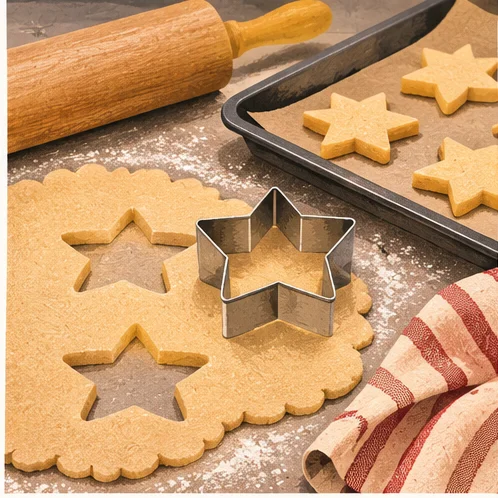
Ready-made pastry and good mincemeat make a sensible shortcut. For 12 small pies, line a bun tin with circles cut from approximately 320g ready-rolled shortcrust pastry. Add roughly 1 heaped teaspoon mincemeat to each, top with pastry stars and bake at 180°C fan / 200°C conventional for around 15–20 minutes, until golden and cooked through. Follow pastry and filling packaging instructions where they differ. Cool before serving.
Variation: Add finely grated orange zest to the mincemeat. Check for nuts, alcohol and other allergens.
Christmas pudding and cake
Make your own if it's a tradition you love and you have time, suitable storage and a trusted recipe. Otherwise buy a pudding or cake you genuinely enjoy. Compare price per serving, ingredients, portion size and the amount likely to be eaten.
A small excellent pudding is often better value than a large one that spends February lurking in the cupboard.
A simple cheeseboard
Choose two or three cheeses with different textures rather than a huge selection. Add crackers, fruit and one chutney. Take perishables out of refrigeration only for the time needed to serve, and return them promptly according to food-safety guidance.
For a small gathering, the cheese itself is the centrepiece. You do not need a decorative mountain of grapes and five kinds of crackers.
Warm gently for 10–15 minutes without a vigorous boil. Strain and serve. Adjust with more water if too sweet. This is an easy festive drink for a mixed-age gathering.
Quick red onion pickle
Makes: One small refrigerator jar Ingredients: 1 red onion, thinly sliced; 100ml cider vinegar; 100ml water; 1 tbsp sugar; ½ tsp salt.
Bring vinegar, water, sugar and salt to a simmer until dissolved. Pour over onion in a clean heatproof container; cool and refrigerate promptly. Allow at least an hour before serving. This is a refrigerated quick pickle, not a shelf-stable preserve. Keep chilled and use within a few days; don't gift it as a room-temperature product.
Leftovers: a pleasure, not a gamble
The best leftovers plan begins before Christmas dinner. Put food away promptly rather than leaving it on the table while everybody settles in for a film.
A simple safety routine
Keep raw and cooked foods separate; use clean utensils.
Cool cooked food quickly and refrigerate it within two hours.
Keep the fridge at 5°C or below, ideally with a fridge thermometer.
Eat refrigerated leftovers within 48 hours as a conservative rule, or freeze promptly.
Reheat until steaming hot throughout; follow specific product instructions.
Do not rely on smell alone to judge safety.
If food has been left unrefrigerated for too long, discard it.
Follow current Food Standards Agency guidance and product-specific instructions, particularly for poultry, rice and foods for vulnerable guests.
Beat eggs with pepper and cheese. Heat oven grill to medium.
Warm oil in an ovenproof frying pan; heat vegetables thoroughly and wilt spinach.
Pour over eggs. Cook on low for 5–7 minutes until edges set.
Place under grill for 2–4 minutes until the centre is fully set and hot throughout. Use an ovenproof handle and keep it away from children.
Swap: Use fresh cooked vegetables if you have no leftovers. Eggs are an allergen; use a suitable alternative recipe for an egg-free meal.
January: four weeks of good suppers
January doesn't need to be a culinary apology for December. It needs warm, nourishing food that uses what you have, keeps shopping manageable and makes ordinary evenings enjoyable.
These four weeks are flexible menu ideas. Every named dish points to a complete recipe here or to a complete method below. Mix days around your schedule, repeat favourites and freeze portions when appropriate.
Week one · Reset the cupboard
Day
Supper
Recipe
Monday
Roast squash, apple and chestnut soup with flatbread
Cook noodles according to packet instructions; drain.
Heat oil in a large pan. Stir-fry carrot, pepper and cabbage for 4–6 minutes until tender-crisp.
Add garlic and ginger for 30 seconds.
Mix soy sauce, honey and water; toss with noodles and vegetables until hot. Finish with lime.
Optional protein: Add cooked tofu or a beaten egg cooked thoroughly. Check soy and wheat allergens.
Tomato and white-bean bake
Serves: 3–4 Time: 35 minutes Ingredients: 1 tbsp olive oil; 1 onion, diced; 2 garlic cloves; 2 x 400g tins white beans, drained; 400g tin tomatoes; 1 tsp dried oregano; 100g spinach; 40g grated cheese or 2 tbsp breadcrumbs; black pepper.
Heat oven to 190°C fan / 210°C conventional. Soften onion in oil for 6 minutes, add garlic.
Stir in beans, tomatoes and oregano; simmer 8 minutes. Add spinach to wilt.
Transfer to a baking dish, top with cheese or breadcrumbs and bake 15–20 minutes until bubbling and golden.
Serve: With toast, rice or a baked potato. Storage: Cool promptly; refrigerate up to 48 hours or freeze portions.
Easy chickpea and spinach curry
Serves: 4 Time: 30 minutes Ingredients: 1 tbsp oil; 1 onion, chopped; 2 garlic cloves; 1 tbsp mild curry powder; 2 x 400g tins chickpeas, drained; 400g tin tomatoes; 200ml water; 100g spinach; ½ lemon; optional 2 tbsp yoghurt.
Soften onion in oil for 6–8 minutes. Add garlic and curry powder; stir for 30 seconds.
Add chickpeas, tomatoes and water. Simmer 15 minutes.
Stir in spinach until wilted. Add lemon and yoghurt if using.
Serve with rice cooked according to its packet instructions.
Swap: Use frozen spinach, thoroughly heated, in place of fresh.
Black-bean quesadillas
Serves: 2 Time: 20 minutes Ingredients: 4 small flour tortillas; 400g tin black beans, drained; ½ tsp cumin; ½ tsp smoked paprika; 60g grated cheese; 1 small tomato, chopped; 1 tsp oil; lime wedges.
Mash beans roughly with cumin and paprika.
Spread over half of each tortilla, add cheese and tomato; fold.
Heat a lightly oiled frying pan. Cook each folded tortilla 2–3 minutes per side until crisp and the filling is hot.
Cut into wedges and serve with lime.
Swap: Use dairy-free melting cheese or omit cheese and add a little mashed avocado just before serving. Check tortillas for wheat/gluten.
Lemony lentil and vegetable stew
Serves: 4 Time: 35 minutes Ingredients: 1 tbsp oil; 1 onion, diced; 2 carrots, diced; 2 celery sticks, diced; 180g dried red lentils, rinsed; 800ml vegetable stock; 1 tsp cumin; ½ tsp turmeric; 100g spinach; juice of ½ lemon.
Soften onion, carrots and celery in oil for 8 minutes.
Stir in cumin and turmeric, then lentils and stock.
Simmer 20–25 minutes, stirring occasionally, until lentils are soft. Add water if too thick.
Stir in spinach and lemon; season. Serve with bread or rice.
Variation: Add a tin of chopped tomatoes and reduce the stock slightly for a richer stew.
Tomato, garlic and chilli pasta
Serves: 2 Time: 25 minutes Ingredients: 200g dried pasta; 1 tbsp olive oil; 2 garlic cloves, sliced; 400g tin tomatoes; pinch chilli flakes; ½ tsp dried oregano; salt and pepper; optional grated cheese.
Cook pasta according to the packet, saving a mug of cooking water.
Warm oil and gently cook garlic for a minute without burning.
Add chilli, oregano and tomatoes; simmer 10–15 minutes. Season.
Toss with pasta, loosening with cooking water. Finish with cheese if liked.
Variation: Add a drained tin of white beans and a handful of spinach for a more substantial meal.
A few food habits worth keeping
The best budget cooking is not a regime of denial. It is a collection of small habits that make food better and spending more deliberate.
Cook once, use twice: Make a larger soup or stew when you can cool and store extra portions safely.
Keep flexible ingredients: Lentils, beans, eggs, potatoes, rice, pasta, frozen greens and tinned tomatoes can become many different meals.
Build flavour from inexpensive things: Onion, garlic, citrus, herbs, spices and a little acidity can transform simple ingredients.
Use convenience intelligently: Frozen vegetables, tinned pulses and ready-made pastry can save money and waste.
Don't confuse homemade with automatically healthier: Judge the ingredients, portions and overall pattern of eating.
Buy the treat you love: A small amount of something excellent often brings more pleasure than a large amount of something ordinary.
The Well Spent kitchen test
Before buying a festive ingredient, ask: Will I use it? Will I enjoy it? Can I use the rest? Is the shortcut worth it?
That's not a joyless calculation. It's how you leave more room in the budget for the good things.
From the kitchen to the Christmas tree
A few of the most enjoyable festive traditions happen away from the table: paper stars, ribbon bows, a wreath on the door, a little bell on the tree, the scent of oranges drying slowly in the oven.
Next: Make & Decorate — beautiful, useful projects with proper instructions, from citrus decorations and paper angels to wreaths, gift wrapping and candle-making.
Editorial production note (not customer-facing copy): This part consolidates prior Well Spent Christmas menus, soups, bread, make-or-buy, January meal plans and food-gift decisions. The 22 numbered recipes/methods and four-week menu are drafted as practical home-cooking copy, not independently kitchen-tested recipes. Before commercial release, recipe testing, allergen review and current UK food-safety guidance should be checked. Illustration plan: seven menu vignettes; Christmas table for one/two/group; shopping basket and cooking timeline; step-by-step flatbreads, pie, roast potatoes and shortbread cross-reference; leftovers storage diagram; four-week January meal cards; citrus-to-tree transition artwork.
The nicest Christmas rooms rarely look as though they have been purchased in one afternoon. They collect their character over years: a familiar ornament, a slightly battered star, a sprig of greenery, a ribbon that has survived several presents and one more outing on the tree.
Start with what you already own. Put the decorations out, choose the pieces you genuinely like and leave space around them. A few considered arrangements often look more beautiful than decorating every available surface.
Three easy places to begin
The front door: A wreath, a ribbon or a single bunch of greenery tied with twine.
The table: A low arrangement of foliage, a bowl of citrus or a collection of reusable ornaments. Keep flames and decorations safely apart.
The tree: Repeat a few natural materials—dried oranges, paper stars, ribbon bows, walnuts and small bells—for a coherent, unfussy look.
Top tip · Pick a palette, not a shopping list: Greenery, warm citrus, natural wood and one ribbon colour make an elegant combination. Use what you have before buying anything new.
Illustration: A welcoming Victorian-style hallway, with a restrained wreath, paper stars and a tree decorated with citrus and ribbon.
Tree decorations from the kitchen cupboard
Dried orange and lemon slices glow beautifully against Christmas lights. Add ribbon bows, walnuts in their shells, little bells and striped candy canes and the result feels collected, not manufactured. It is inexpensive, personal and surprisingly stylish.
Project A · Oven-dried orange and lemon slices
Makes: Approximately 20–30 slices, depending on fruit size Hands-on time: 15 minutes Drying time: Approximately 2–5 hours, sometimes longer
You will need: 2 oranges; 2 lemons; sharp knife and chopping board; clean tea towel or kitchen paper; wire racks or parchment-lined trays; ribbon or twine; a skewer or large needle for making hanging holes.
Heat the oven to its lowest practical setting, ideally around 70–90°C. Check your oven manual; low-temperature performance varies. A food dehydrator is another option.
Slice the fruit evenly, approximately 3–5mm thick. Adults should do the cutting.
Pat the slices dry to remove surface juice. Lay in a single layer on wire racks over trays, or on lined baking trays.
Dry slowly, turning occasionally. Check frequently, especially in a hotter oven. Remove pieces when they feel thoroughly dry rather than sticky or wet; thicker slices take longer.
Cool completely. Make a small hole near the rind and thread with ribbon or twine. Tie a secure loop.
Why this works: The translucent flesh catches the lights, while the peel adds colour and shape. Mixing oranges and lemons creates a softer, more varied look.
Storage: Dried fruit ornaments are decorative, not for eating. Moisture can cause mould. Store only when completely dry, in a breathable or dry container in a cool place; inspect before reuse and discard any that become damp or mouldy. Keep away from flames, heaters and hot bulbs. Never leave the oven unattended during drying.
Illustration sequence: (1) evenly sliced citrus; (2) slices spaced on a tray; (3) dry translucent slice with hanging hole; (4) finished orange-and-lemon ornaments on a tree.
Project B · Ribbon bows and tiny bells
Makes: 6 bows Time: 20 minutes
You will need: Approximately 3m ribbon, ideally reused or fabric ribbon; scissors; six lengths of thin twine; optional small bells.
Cut six 40–50cm lengths of ribbon, allowing extra for fuller bows.
Tie each into a bow with generous loops and trailing ends.
Secure a twine loop around the centre knot; add a small bell to the loop if desired.
Trim ribbon ends neatly and hang the bows at different heights.
Top tip · The grown-up finish: Use one ribbon colour in two textures—velvet and cotton, for instance—rather than six unrelated patterns.
Safety: Bells and other small components are choking hazards for young children. Secure them firmly and hang them out of reach. Long cords and ribbons can present entanglement risks.
Project C · Walnuts, candy canes and natural touches
Walnuts: Use clean, dry whole walnuts in their shells. Tie firmly into a little cradle of twine, or use a small decorative hanging pouch. Avoid piercing or drilling nuts where fragments could fly; adult supervision is needed. Do not use where nut allergies may make handling unsafe.
Candy canes: Hang individually wrapped canes from sturdy branches. Keep away from pets, small children and heat. Treat them as food gifts only if the wrappers are intact and ingredients are suitable; otherwise keep them decorative and discard when appropriate.
Pine cones: Gather only where permitted. Clean and dry thoroughly before use. Attach a hanging loop with twine, keeping adhesives away from children and flames.
Finish the tree: Distribute the largest orange slices first, then add lemon slices, bows, bells and smaller details. Stand back between stages. The aim is a tree with room to breathe.
Illustration: A full-height tree with clearly recognisable citrus slices, ribbon bows, bells, walnuts and candy canes; a close-up of one branch showing the hanging methods.
A natural Christmas wreath, properly made
A fresh wreath looks generous even when the ingredients are modest. Evergreen cuttings, a little ivy and a few seed heads can make something more distinctive than a shop-bought wreath covered in plastic berries.
Time: 60–90 minutes for a first wreath Size: Approximately 30–35cm finished diameter
You will need: One 25–30cm reusable wire or straw wreath base; approximately 20–30 small bundles of fresh evergreen foliage (fir, pine, cedar or similar); florist's binding wire or sturdy natural twine; secateurs; a secure hanging loop; optional pine cones, dried citrus and ribbon. Wear gloves and check that plants are safe to handle, especially around pets and children.
Build it in five stages
Prepare the foliage. Cut stems into manageable 12–18cm lengths. Make small mixed bundles, with the strongest evergreen at the back and softer foliage in front.
Secure the first bundle. Lay it along the base and bind the stems tightly with wire or twine. Keep the binding on the base, not across the visible foliage.
Overlap consistently. Add each new bundle so its tips cover the previous stems and bindings. Work around the circle in the same direction.
Close the gap. Lift the foliage of the first bundle and tuck the final stems underneath. Bind securely and check for bare patches.
Finish and hang. Attach a strong hanging loop to the base itself. Add dried citrus, ribbon or cones with secure ties, not loose items that could fall.
Why this works: Repeated overlapping bundles create fullness and hide the structure. One consistent direction gives the wreath its natural sweep.
Care and safety: Fresh greenery dries out indoors, particularly near heat. Display away from open flames, candles and radiators. Check the wreath regularly and remove it when brittle. Do not place poisonous or irritating plants where children or pets can reach them.
Smarter spend: Ask a local florist whether they have suitable offcuts, or use permitted garden prunings. Do not cut greenery from public or private land without permission.
Illustration sequence: Base and cut foliage; first bundle bound to base; overlapping bundles halfway round; final wreath on a door.
Paper angels, stars, wreaths and garlands
Paper decorations are inexpensive, easy to store and particularly lovely when made from old sheet music, saved wrapping paper, brown parcel paper or pages from a damaged book that cannot be repaired.
Project A · Folded paper angels
Makes: 4 Time: About 40 minutes
Materials: Eight A5 sheets of light paper; four wooden beads or paper circles for heads; twine; glue stick; scissors; optional ribbon.
Concertina-fold two sheets for each angel, making folds about 1cm wide.
Fold one concertina in half for the body. Fold the other in half and open its upper portions slightly to form wings.
Glue or tie the pieces together at the centre, leaving the folds fanned out.
Add a bead or paper head and a hanging loop. Allow glue to dry before hanging.
Illustration: Four stages of concertina folds becoming a finished hanging angel.
Project B · Folded paper stars
Makes: 6 simple stars Time: 30–45 minutes
Materials: Coloured card or reused stiff paper; star template; scissors; ruler; pencil; hole punch; twine.
Trace six five-pointed stars onto card and cut them out.
Score a light line from each point towards the centre using a blunt scoring tool and ruler, with adult supervision.
Fold gently along the lines to create raised ridges.
Punch a small hole near one point and thread a hanging loop.
Variation: Layer a small star over a larger contrasting one for depth.
Project C · A paper wreath
Makes: 1 wreath Time: 45–60 minutes
Materials: A cardboard ring approximately 25cm across; 20–30 paper leaves cut from saved wrapping paper or coloured paper; glue stick; ribbon; optional paper berries.
Cut the ring from sturdy cardboard, leaving a 5–7cm-wide band.
Cut leaves in two or three sizes. Fold each lightly down the centre.
Glue leaves around the ring in overlapping clusters, pointing in a consistent direction.
Add paper berries or a ribbon bow. Attach a strong hanging loop to the cardboard ring.
Top tip: Choose just two greens and one accent colour. Repetition looks intentional; every colour in the craft drawer rarely does.
Project D · A garland that survives next year
Cut 15–20 paper shapes—stars, circles or folded fans—and thread onto sturdy string, securing each with a knot or small paper tab. Leave a little space between shapes. Hang away from flames, cooking surfaces and children's reach.
Illustration: A page of finished angels, stars, wreaths and a garland, with one small assembly diagram per project.
Christmas cards worth displaying
Cards are little pieces of somebody else's Christmas. Rather than letting them collect in a pile, give them a place to be seen.
The peg-and-string card garland
Time: 15 minutes Materials: 2–3m of ribbon or twine; 15–20 small wooden pegs; removable hooks suitable for the surface; optional greenery.
Choose a wall, shelf or mantel well away from candles, heaters and hot lights.
Secure the twine with suitable hooks, leaving a gentle drape.
Peg cards along the length, alternating portrait and landscape shapes.
Add a little greenery at the ends if it can be secured safely.
Variation: Use one branch displayed in a sturdy vase, with cards hanging on short loops. Keep the arrangement stable and away from pets and young children.
Top tip · Keep the best: Save a few especially meaningful cards in a small labelled envelope. Recycle the rest where local rules allow; remove non-paper embellishments first.
Wrapping, tags and the good-looking parcel
Beautiful wrapping is about proportion and care, not layers of expensive paper. Plain kraft paper, reused tissue, a ribbon and a small handwritten tag can be very effective.
Three simple approaches
The classic parcel: Brown paper, a single length of velvet ribbon and a card tag.
The botanical parcel: Plain paper, cotton twine and a sprig of safe, dry greenery tucked under the knot.
The reusable wrap: A clean fabric square tied securely around a box, with instructions for reusing the fabric.
For awkwardly shaped gifts, use a reused box or gift bag. A neat parcel that opens easily is preferable to an architectural achievement involving half a roll of tape.
Make a batch of gift tags
Cut tags from sturdy offcuts of card, punch a hole, add a ribbon loop and write names clearly. If you are making gifts in batches, add contents and allergens on a separate label rather than trying to squeeze everything onto a decorative tag.
Worth making or buying? Reusing good packaging is usually worthwhile. Making elaborate gift boxes from scratch is enjoyable if you love crafting, but not compulsory.
Illustration: Three parcels shown side by side, each with a small materials caption.
Homemade candles: a careful beginner's project
A candle can make a lovely gift, but it is a small heat-and-fire project, not a place for improvisation. Use a reputable candle-making kit with wax, suitable wicks, fragrance guidance and heat-safe containers designed for candles. Follow its instructions for melting, pouring, curing and burn testing.
A sensible first project
Materials: A complete beginner's container-candle kit; a dedicated thermometer if specified; a heat-safe work surface; protective gloves; a stable container of the type supplied or recommended by the kit.
Read the entire kit instructions and check the recommended equipment before starting.
Prepare the work area away from children, pets and combustible materials.
Melt wax only by the method and temperature range specified by the manufacturer. Never leave heating wax unattended.
Fix and centre the specified wick in the specified container.
Add fragrance only if the kit permits it, at the stated rate and temperature. Pour carefully and allow to cool and cure as directed.
Trim the wick and conduct a supervised burn test following the kit guidance before considering gifting.
Never embed dried orange slices, flowers, nuts, paper, glitter or other combustible decorations in candle wax. Decorative dried botanicals belong beside a candle, at a safe distance—not inside it. Do not reuse ordinary drinking glasses or food jars unless specifically certified as suitable candle vessels.
Gift label: Include the maker's safety guidance, such as burning within sight, keeping away from children and pets, and placing on a heat-resistant surface. If you intend to sell candles rather than give a personal gift, product-safety and labelling requirements need separate specialist checking.
Illustration: Safe workbench layout and a finished plain candle with an attractive paper gift sleeve; no botanicals in wax.
An afternoon with a purpose
A craft afternoon is more satisfying when everyone leaves with something finished. The aim is a little making, a little conversation and a useful result—not a kitchen table permanently carpeted in glitter.
Three ready-to-run sessions
A decoration afternoon (ages and supervision permitting): Set out pre-cut card stars, paper angel templates, coloured pencils, glue sticks and ribbons. Make four decorations each and pack them in reusable boxes.
A gift-wrapping afternoon: Bring saved boxes, paper, fabric scraps and ribbons. Wrap gifts, make tags and organise parcels by recipient.
A winter wreath afternoon: Adults can prepare foliage bundles and make door wreaths. Children can work on paper wreaths nearby with age-appropriate tools.
Set it up well
Choose one project per table and provide enough tools to avoid a queue.
Make a sample beforehand so the steps are clear.
Allow drying time and provide a place to store finished work.
Label scissors, sharp tools, hot equipment and small components as adult-only.
Have a simple snack and a clear finish time.
Top tip · Make the kit complete: If a project requires a hole punch, ribbon or glue, include it. A gift kit that needs six additional purchases is not a finished gift.
Advent and the Christmas countdown
An Advent calendar needn't deliver 24 new objects. A small daily ritual, an outing or a note can be more enjoyable—and leaves considerably less packaging.
Twenty-four ideas, without twenty-four purchases
Put on the first favourite Christmas song.
Write a card to somebody who would appreciate it.
Make a paper star.
Choose a film for a quiet evening.
Take a wintry walk.
Make hot chocolate.
Look through old family photographs.
Wrap one gift beautifully.
Read a short story aloud.
Make an orange-slice decoration.
Donate an appropriate item or make a small contribution if you can.
Try a new soup recipe.
Call somebody you miss.
Visit a local display or free community event.
Make a ribbon bow for the tree.
Bake shortbread.
Play a favourite board or card game.
Write a thank-you note.
Put up the card garland.
Plan a shared meal.
Prepare a gift for a neighbour.
Take an evening walk to see the lights.
Set the table or prepare tomorrow's serving dishes.
Do one thing that makes Christmas Eve feel like yours.
For children, choose activities appropriate to their ages and energy levels. For someone spending Christmas alone, make the calendar a collection of pleasures rather than an imitation of a large-family routine.
Illustration: A 24-window paper calendar, with small motifs for making, eating, walking and connecting.
Good days out, without an expensive itinerary
The best seasonal outing may be a free walk, a local market, a church or community concert, a museum visit or a train ride to somewhere interesting. Choose according to the people going, not the most photogenic advert.
Before booking
Check the full price, including booking fees, transport, parking and refreshments.
Look for concessions, free-entry times and local-resident offers where available.
Check accessibility, weather exposure and how long children or older guests will be comfortable.
Confirm cancellation or refund terms.
Avoid filling every weekend. Rest is a legitimate Christmas activity.
The winter walk: Choose a route with a sensible distance, suitable footwear and a warm place to finish. A wintry walk sounds more appealing than a cold walk, and usually is if somebody remembered the gloves.
Smarter spend: Bring a flask or snacks when practical. Spend on a lovely café stop if that is the part everyone most enjoys.
Hosting, guests and the household
Hospitality is not measured by the number of spare pillows you buy. A comfortable bed, clear arrangements and a welcoming cup of tea will do most of the work.
A simple hosting checklist
Confirm arrival and departure plans, including transport and parking.
Ask about allergies, accessibility needs and sleeping arrangements.
Put out clean bedding, towels and somewhere for belongings.
Make breakfast easy: bread, fruit, yoghurt, cereal or eggs, according to preferences.
Agree who is cooking, shopping and clearing up if the visit is lengthy.
Leave room for guests—and hosts—to have a little quiet time.
Heat, lights and household safety
Use decorations and electrical lights according to their instructions; inspect cables and plugs, and do not overload sockets. Keep candles away from foliage, paper, fabric and children. Switch off decorative lights when appropriate under the manufacturer's guidance and never use indoor-only products outdoors.
If travelling, check heating arrangements, locks, pets and deliveries before leaving. Keep gifts out of sight in parked cars and take ordinary precautions with luggage and valuables.
Pets and the festivities
Keep chocolate, grapes and raisins, alcohol, some sweeteners and other potentially toxic foods away from pets. Secure ribbon, tinsel, hooks and small ornaments; prevent access to electrical cords and hot candles. Ask a vet promptly if you suspect ingestion of something harmful. Guests should know the household's pet rules, particularly around feeding scraps.
Top tip · The calm-house rule: Make one room or corner less festive and more comfortable. It gives tired guests, children and pets somewhere to retreat.
Christmas with room for other people
Not everybody has a busy table, a generous budget or an easy relationship with the season. A thoughtful Christmas makes room for that reality without turning generosity into a performance.
Ways to include people well
Invite without pressure. “We're having soup and bread on Sunday; you'd be very welcome” is easier to accept than an elaborate invitation that makes somebody feel indebted.
Ask what helps. A neighbour may appreciate a lift, company, shopping help or simply a friendly conversation. Don't assume what they need.
Give usefully. Food banks, community pantries, social supermarkets and local charities often publish what they need most. Check current requests and opening arrangements before donating goods or volunteering.
Respect the quiet Christmas. Some people choose to spend the day alone and enjoy it. An invitation is kind; insisting is not.
Top tip · Make generosity sustainable: Choose something you can genuinely offer—an hour, a meal, a lift, a modest donation—and follow through.
Boxing Day, the days between and a gentler January
The days after Christmas can be some of the nicest. There are leftovers to turn into something new, books to open, friends to see and absolutely no requirement to rush back into spending.
A simple reset
Put food away safely. Follow the leftover guidance in Part Three; freeze suitable portions promptly rather than hoping to use everything.
Sort gifts gently. Keep what you love, check returns for unsuitable purchases, and pass on usable items responsibly.
Store decorations thoughtfully. Dry and pack reusable paper, ribbon and ornaments; discard citrus that has become damp or mouldy.
Review payment dates. Check any outstanding instalments or card balances against January bills.
Keep the pleasures. Make soup, go for a walk, invite somebody round, finish a book. January doesn't need to be joyless to be economical.
The ten-minute money review
Look at the Christmas budget you made in Part One. What did you spend? What remains committed? Were there surprise costs? Did a particular gift, meal or outing turn out to be excellent value? Write down one change for next year.
Top tip · Keep the useful notes, not the guilt: The point is to make next Christmas easier, not to conduct an inquiry into every mince pie.
The good things worth keeping
At the end of Christmas, the most useful question is not whether everything was perfect. It is what made the season feel like yours.
Perhaps it was the meal that brought everybody together, even though the gravy needed rescuing. Perhaps it was the homemade orange slices on the tree, a walk in the fading light, a thoughtful gift or a quiet afternoon when nobody expected anything from you.
There is a useful kind of pleasure in spending well. It is not about spending the least, and certainly not about turning Christmas into an exercise in restraint. It is about noticing what matters, choosing it deliberately and refusing to pay for all the things that don't.
A note to next Christmas
Before you put the decorations away, write a few lines:
What was worth every penny?
What did we enjoy that cost very little?
What did we buy too much of?
Which recipe, tradition or decoration deserves another year?
What would make next Christmas simpler?
Put the note with your decorations or in your digital Christmas planner. Next year, when the adverts begin their annual campaign to convince you that everything must be new, you will have a much better source of advice: yourself.
The good things are worth keeping. The rest can go.
A very good Christmas, indeed.
Well Spent · Living well. Spending wisely. Wasting less.
Editorial production note (not customer-facing): This part incorporates the approved natural-tree-decoration additions (oven-dried orange and lemon, bows, bells, walnuts and candy canes), wreath and paper craft instructions, cards, wrapping, cautious candle guidance, purposeful children's crafts, Advent, activities, hosting, pets, community and the strengthened conclusion. Illustration callouts are specified but final commissioned instructional artwork has not yet been inserted. Check all craft and safety instructions against product-specific directions before commercial publication.
A few more dependable dishes for festive gatherings and the weeks afterwards, using familiar ingredients in different ways.
Chicken and root-vegetable casserole
Serves 2 · About 55 minutes
Ingredients
400g boneless chicken thighs
2 carrots, chopped
1 onion, sliced
350g potatoes, diced
400ml chicken stock
1 tbsp oil
1 tsp dried thyme
1 tbsp plain flour
Method
Heat oil in a lidded casserole and brown chicken for 3–4 minutes per side.
Remove to a plate.
Soften onion for 4 minutes, stir in flour and thyme, then slowly add stock.
Add carrots, potatoes and chicken with its juices.
Cover and simmer gently for 30–35 minutes until vegetables are tender and chicken is thoroughly cooked (75°C in the centre).
Finish: Finish with parsley, lemon zest or a teaspoon of mustard.
Variation: Use any suitable root vegetables and dried rosemary instead of thyme.
Storage: Cool promptly and refrigerate or freeze as appropriate. Follow current food-safety guidance for the ingredients used.
Toad in the hole with onion gravy
Serves 2 · About 50 minutes
Ingredients
4 sausages
100g plain flour
2 eggs
150ml milk
2 onions, sliced
1 tbsp oil for tin
1 tbsp oil for gravy
1 tbsp plain flour for gravy
300ml vegetable stock
Method
Heat oven to 220°C/200°C fan.
Put sausages and 1 tbsp oil in a roasting tin; cook 10 minutes.
Whisk 100g flour, eggs and milk to a smooth batter.
Pour around hot sausages and bake 22–25 minutes without opening the oven until risen and golden; ensure sausages are cooked through.
Meanwhile slowly soften onions in oil for 12 minutes, stir in 1 tbsp flour, then stock; simmer 5 minutes.
Serve together.
Finish: Add dried sage or mustard powder to the batter; thyme to the gravy.
Variation: Choose vegetarian sausages if preferred and follow their cooking instructions.
Storage: Cool promptly and refrigerate or freeze as appropriate. Follow current food-safety guidance for the ingredients used.
Chicken and leek pie filling
Serves 2 · About 30 minutes
Ingredients
250g cooked chicken, shredded
2 leeks, washed and sliced
250ml milk
25g plain flour
25g butter or 2 tbsp oil
1 tsp mustard, optional
black pepper
Method
Cook leeks gently in butter or oil for 8–10 minutes until soft.
Stir in flour and cook 1 minute.
Add milk gradually, stirring until smooth.
Simmer 4–5 minutes until thick.
Stir in cooked chicken and mustard; heat until piping hot throughout.
Spoon into an ovenproof dish and top with mashed potato or ready-made pastry; if adding pastry, bake according to packet instructions until golden and filling is piping hot.
Finish: Add dried tarragon, thyme or parsley.
Variation: Frozen leeks are suitable; use leftover roast chicken stored safely.
Storage: Cool promptly and refrigerate or freeze as appropriate. Follow current food-safety guidance for the ingredients used.
Lentil and vegetable cottage pie
Serves 2 · About 55 minutes
Ingredients
1 x 400g tin green lentils, drained
450g potatoes, peeled and chopped
2 carrots, diced
1 onion, chopped
200ml vegetable stock
1 tbsp tomato purée
1 tbsp oil
1 tsp dried thyme
20g butter or 2 tbsp milk, optional
Method
Heat oven to 200°C/180°C fan.
Boil potatoes 15–20 minutes until tender; drain and mash with butter or milk if using.
Soften onion and carrots in oil for 8 minutes.
Stir in tomato purée and thyme, add lentils and stock, and simmer 10 minutes until thick.
Spoon into an ovenproof dish, top with mash and bake 20 minutes until bubbling and lightly browned.
Finish: Top with a little grated cheese or chopped parsley.
Variation: Add mushrooms, smoked paprika or a pinch of cinnamon.
Storage: Cool promptly and refrigerate or freeze as appropriate. Follow current food-safety guidance for the ingredients used.
Roast chicken with lemon and herbs
Serves 4 · About 100 minutes
Ingredients
1 whole chicken, approximately 1.5kg
1 lemon
2 onions, quartered
400g carrots
800g potatoes
3 tbsp oil
1 tsp dried rosemary or thyme
black pepper
Method
Heat oven to 200°C/180°C fan.
Put onions and carrots in a roasting tin with 1 tbsp oil.
Pat chicken dry, place on vegetables, rub with 1 tbsp oil, herbs and pepper; put lemon halves in cavity without overstuffing.
Roast for approximately 1 hour 20 minutes, adjusting for bird size, until the thickest part reaches 75°C and juices run clear.
Rest 15–20 minutes.
Meanwhile parboil potatoes 8 minutes, drain, rough up edges and roast in remaining oil for 45–55 minutes until crisp.
Finish: Add orange zest, rosemary sprigs or a pinch of smoked paprika.
Variation: Use dried herbs and the citrus already in the fruit bowl.
Storage: Cool promptly and refrigerate or freeze as appropriate. Follow current food-safety guidance for the ingredients used.
Lentil, mushroom and chestnut loaf
Serves 4 · About 65 minutes
Ingredients
400g cooked lentils, drained
250g mushrooms, finely chopped
180g cooked peeled chestnuts, chopped
1 onion, chopped
2 eggs
70g oats
1 tbsp oil
1 tsp dried sage
1 tbsp tomato purée
Method
Heat oven to 190°C/170°C fan.
Line a small loaf tin.
Soften onion in oil for 5 minutes; add mushrooms and cook until dry, about 8 minutes.
Mix with lentils, chestnuts, oats, sage, tomato purée and beaten eggs.
Mash lightly so mixture binds.
Press firmly into tin and bake 35–40 minutes until set and hot throughout.
Rest 10 minutes before slicing.
Finish: Serve with onion gravy, cranberry sauce or thyme.
Variation: Use a mixture of lentils and finely chopped beans; for an egg-free version use a tested binder rather than omitting eggs.
Storage: Cool promptly and refrigerate or freeze as appropriate. Follow current food-safety guidance for the ingredients used.
Red cabbage with apple
Serves 4 · About 55 minutes
Ingredients
600g red cabbage, finely sliced
2 apples, chopped
1 onion, sliced
3 tbsp cider vinegar
1 tbsp brown sugar
100ml water
1 tbsp oil
1 pinch ground cinnamon
Method
Soften onion in oil for 5 minutes.
Add cabbage, apple, vinegar, sugar, water and cinnamon.
Cover and cook gently 35–45 minutes, stirring occasionally, until tender.
Uncover to reduce excess liquid; adjust sweetness and acidity to taste.
Finish: Finish with orange zest or a few toasted walnuts.
Variation: White vinegar works; a pinch of allspice is lovely.
Storage: Cool promptly and refrigerate or freeze as appropriate. Follow current food-safety guidance for the ingredients used.
Carrot and parsnip tray roast
Serves 4 · About 45 minutes
Ingredients
500g carrots, cut into batons
500g parsnips, cut into batons
2 tbsp oil
1 tsp dried thyme
1 tsp mustard, optional
Method
Heat oven to 210°C/190°C fan.
Toss vegetables with oil, thyme and mustard if using.
Spread in one layer on a tray.
Roast 30–40 minutes, turning once, until browned at the edges and tender.
Finish: Finish with chopped parsley, orange zest or toasted seeds.
Variation: A little cumin or smoked paprika makes a more fragrant version.
Storage: Cool promptly and refrigerate or freeze as appropriate. Follow current food-safety guidance for the ingredients used.
Small-batch Christmas crumble
Serves 2 · About 40 minutes
Ingredients
3 apples, cored and sliced
150g frozen berries
90g plain flour
55g cold butter, diced
35g oats
40g brown sugar
½ tsp ground cinnamon
Method
Heat oven to 190°C/170°C fan.
Put apples and berries in a small baking dish; sprinkle with cinnamon and a little of the sugar.
Rub butter into flour until crumbly, then stir in oats and remaining sugar.
Scatter over fruit and bake 25–30 minutes until bubbling and golden.
Finish: Serve with yoghurt, custard or a few toasted nuts.
Variation: Swap berries for raisins or chopped dried apricots.
Storage: Cool promptly and refrigerate or freeze as appropriate. Follow current food-safety guidance for the ingredients used.
Shortcut mince pies
Serves 12 · About 35 minutes
Ingredients
320g ready-rolled shortcrust pastry
400g mincemeat
1 tbsp milk
plain flour for dusting
Method
Heat oven to 200°C/180°C fan.
Lightly grease a 12-hole shallow bun tin.
Cut 12 pastry circles for bases and 12 smaller shapes for tops.
Line tin, add a heaped teaspoon of mincemeat to each, top with pastry and brush with milk.
Bake 15–20 minutes until golden.
Cool in tin briefly before transferring to rack.
Finish: Add orange zest or a pinch of cinnamon to mincemeat.
Variation: Use pastry offcuts for stars; check mincemeat ingredients for dietary needs.
Storage: Cool promptly and refrigerate or freeze as appropriate. Follow current food-safety guidance for the ingredients used.
Festive shortbread
Serves 16 · About 35 minutes
Ingredients
150g plain flour
100g softened butter
50g caster sugar
finely grated zest of ½ orange, optional
Method
Heat oven to 170°C/150°C fan.
Cream butter and sugar, then mix in flour and orange zest to form a soft dough.
Roll or press to 1cm thickness; cut into 16 pieces.
Chill 10 minutes if soft.
Bake 15–20 minutes until just pale golden.
Cool on tray for 5 minutes, then transfer to rack.
Finish: Dust lightly with cinnamon sugar or add finely chopped rosemary.
Variation: Lemon zest works instead of orange.
Storage: Cool promptly and refrigerate or freeze as appropriate. Follow current food-safety guidance for the ingredients used.
SHOPPING / SUBSCRIPTIONS The subscription hiding in the basket A tempting introductory price can turn into a much larger commitment if the checkout quietly enrols you in repeat deliveries, membership or a paid trial. Before pressing “buy” Check whether the offer is a one-off purchase or a subscription. Look for renewal frequency, the price after any trial, minimum term, cancellation method, delivery fees and whether boxes or refills arrive automatically. Watch for the familiar traps Discounted first boxes, beauty replenishment plans, vitamin deliveries, streaming trials, recipe kits, premium delivery memberships and “free” trials requiring payment details. None is necessarily bad value, but only when you intend to keep paying. Keep evidence Save screenshots of the price and terms, your confirmation email and any cancellation acknowledgement. Put renewal dates in your calendar and review bank and card statements after Christmas. If you did not knowingly agree Contact the business promptly, challenge unclear or unauthorised charges and ask your payment provider about available protections. Cancellation and refund rights depend on the agreement and circumstances; seek independent consumer advice if needed. The simplest question What will this cost me over three, six and twelve months? If you only wanted one gift, make sure you are buying just one. Before publication, check this section against the latest UK subscription-contract and consumer-protection rules.
A pet is for life. Not for the big reveal
A pet is for life. Not for the big reveal. A puppy or kitten under the Christmas tree might look delightful in a film. For the animal, however, it is rarely an ideal introduction to a new home. A new pet needs calm surroundings, predictable routines, gentle introductions and consistent care while it adjusts. Christmas often brings the opposite: visitors, noise, excitement, travel and disrupted schedules. Where possible, wait until festivities are over and normal routines have returned. If a child is longing for a pet Explore the idea together. Research the animal’s needs, expected lifespan, suitable home environment and who will provide daily care. Give a promise to plan, not a surprise animal. A book, a family research project or a future visit to a reputable rescue centre can be a meaningful starting point. Check the full commitment. Food, equipment, insurance, veterinary bills, training, boarding and time are ongoing responsibilities, not one-off Christmas expenses. Be prepared to say no. If the home, finances or routine cannot support a pet, it is kinder to wait or choose a different gift. Rescue animals are not simply a cheaper alternative: they deserve the same careful planning and lifetime commitment. The Well Spent thought: The best welcome is not a ribbon and a bow. It is a calm, prepared home and people ready for the responsibility.
A tree worth keeping
MAKE IT SPECIAL / CHRISTMAS TREES A tree worth keeping Real or artificial? There is no single right answer. A real tree brings scent and ritual; an artificial one offers convenience and can make good financial sense when used year after year. The Well Spent comparison Real: budget for the tree every year, plus a stand if needed. Buy locally where practical, water a cut tree and check your council’s collection or recycling arrangements. Artificial: the best-value tree may be the one already in your loft. Reuse it for as many Christmases as possible; consider second-hand before buying new. Other options: a small potted tree, a rented tree where available, or a branch decorated with treasured ornaments can suit smaller spaces. The environmental question Impact depends on materials, manufacture, transport, how long an artificial tree is kept, and how a real tree is grown and disposed of. Avoid blanket claims that one type is always greener. Worth it? Work out the total cost over the years you expect to use it, including decorations, storage and disposal. Then choose the tradition you actually enjoy. Tree safety: keep trees stable, away from heat sources, and use suitable, undamaged lights.
The true cost of an outing
GOING OUT The true cost of an outing An inexpensive ticket can become an expensive afternoon if you forget everything around it. Check Questions worth asking Travel Parking, fuel, public transport, taxi? Food Will you need a meal or can you eat beforehand? Extras Booking fees, cloakroom, refreshments? Value Will this genuinely be a highlight? For paid events, compare the total outing cost rather than the ticket price alone. And remember that staying in can be an excellent plan — especially if you have already bought the good cheese.
For consumer rights, use Citizens Advice; for borrowing and debt, MoneyHelper; for food storage and safety, Food Standards Agency; and for scams, NCSC. Check individual product prices, terms and local rules at the time of purchase.
Recipes have been editorially reviewed, not physically kitchen-tested. Keep food chilled promptly, follow current food-safety guidance, and check allergens for every recipient.